
Executive Summary
Chiropractic care may improve joint mobility and range of motion by reducing joint restriction, calming protective muscle guarding, and improving neuromuscular coordination so movement feels smoother and less limited. The most durable mobility gains typically occur when adjustments are paired with targeted exercise, posture/activity changes, and measurable functional goals.
Key Takeaways
- Mobility loss is often multi-factorial: Joints feel “stuck” due to altered mechanics, increased muscle guarding, pain sensitivity, deconditioning, posture stress, prior injuries, or arthritic changes.
- Adjustments can influence motion beyond the “pop”: Improved range is commonly attributed to mechanical joint effects, neuromuscular changes in muscle activation, and short-term pain modulation—without requiring cavitation.
- Results can be rapid, but lasting change takes a plan: Some people notice easier movement within 0–72 hours, while longer-term improvements are more likely over 2–6+ weeks when contributing habits and strength deficits are addressed.
- Some regions tend to respond well for mobility goals: Thoracic spine, neck, ribs, pelvis/low back, and ankles often show noticeable functional improvements when stiffness is primarily mechanical.
- Safety screening and follow-up metrics matter: Quality care includes red-flag screening, technique modification when needed, and re-testing (ROM/functional tasks) to objectively track mobility progress.
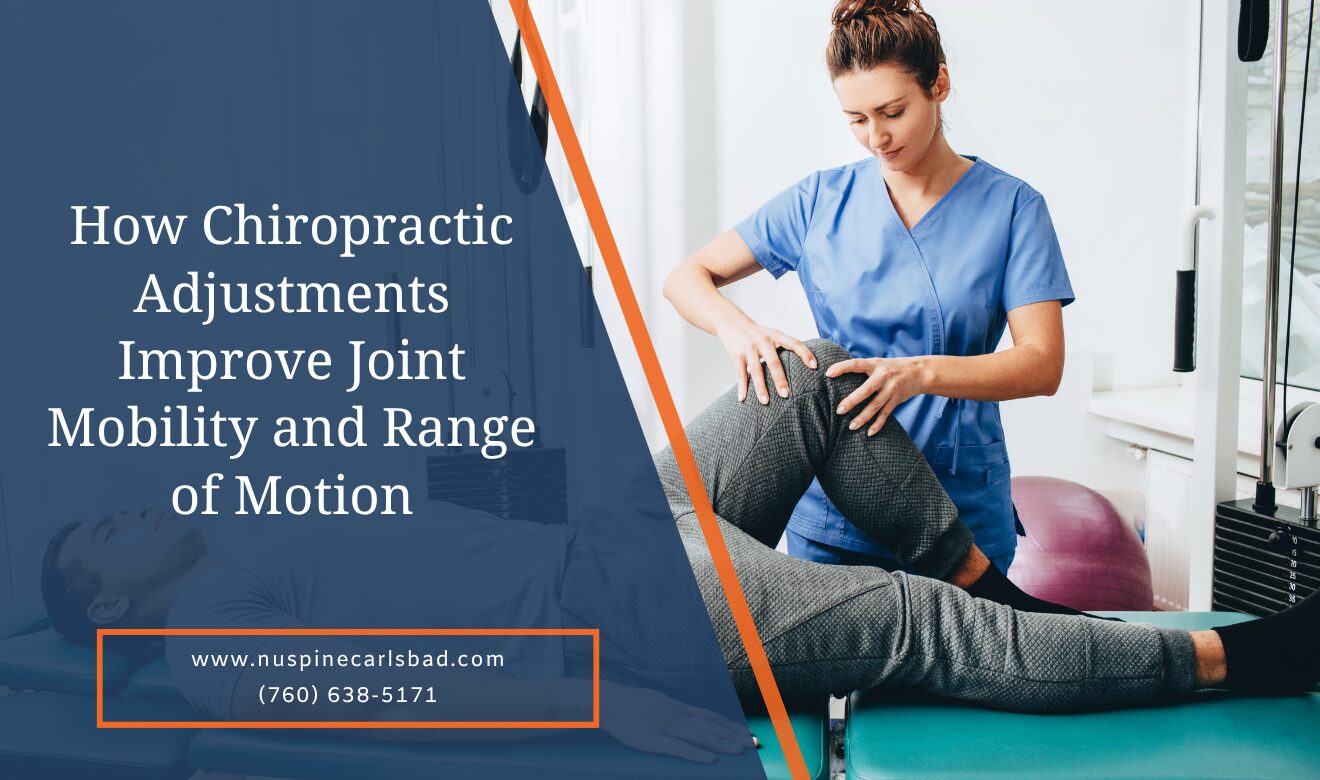
Chiropractic adjustments can improve joint mobility and range of motion by restoring normal movement in joints that are stiff, restricted, or not gliding the way they should. In simple terms, they help joints move more freely, which can make everyday motions feel smoother and less limited. If you’ve been wondering how chiropractic care affects joint mobility, it often comes down to reducing joint restriction, easing muscle guarding around the area, and improving how the joint and nervous system coordinate movement.
For example, a “stuck” mid-back can make it harder to rotate when you check your blind spot while driving, and an adjustment may help that twist feel easier. A restricted ankle can shorten your stride or make stairs feel awkward, and improved ankle motion can help you walk more normally. Even a stiff neck that limits looking over your shoulder can sometimes loosen up after treatment, making turning your head feel less forced.
How chiropractic care affects joint mobility (and why joints get “stuck”)
When people ask how chiropractic care affects joint mobility, they’re usually describing a joint that feels blocked, tight, or hard to move through a normal range. Clinically, that can involve altered joint mechanics (how the surfaces glide), increased muscle tone/guarding around the joint, and changes in how the nervous system coordinates movement.
Common reasons joints lose mobility include:
- Prolonged sitting or repetitive postures (desk work, driving, phone use)
- Prior sprains/strains that healed but left stiffness (ankle, ribs, neck)
- Pain-related guarding where muscles tighten to protect a sensitive area
- Arthritic change (some stiffness is structural, some is modifiable)
- Deconditioning (less movement leads to less usable range)
In simple terms, how chiropractic care affects joint mobility often comes down to restoring small-but-important joint motion and reducing the “bracing” response in surrounding tissues so you can move more normally.
What happens during an adjustment that can improve range of motion?
An adjustment (also called spinal manipulation in many clinical studies) is a quick, controlled force applied to a joint to help restore motion. While the “pop” gets attention, it’s not the goal—and not required for results. The pop is typically cavitation (gas release) within the joint fluid.
Here are the main ways how chiropractic care affects joint mobility is explained in modern practice:
- Mechanical effect: Helps a restricted joint move more normally (better glide/translation)
- Neuromuscular effect: Changes how muscles around the joint activate, which can reduce guarding and improve coordination
- Pain modulation: For some people, reducing pain sensitivity allows a freer, more confident movement pattern
Research often looks at short-term changes in pain and function. For example, a 2017 clinical practice guideline in JAMA recommended spinal manipulation as one option for acute or subacute low back pain, alongside treatments like heat, massage, and exercise—reflecting that manipulation can be helpful for function in appropriate patients.
How long does it take to notice improved mobility?
People commonly notice changes in stiffness or turning ability quickly, but the timeline varies. If you’re wondering how chiropractic care affects joint mobility over time, think in “windows”:
- Same day to 72 hours: Many notice easier turning, less “catching,” or improved comfort in a specific movement.
- 2–6 weeks: More durable improvements often require addressing contributing factors (work posture, strength, walking mechanics, sleep position).
- 6+ weeks: Best window to build lasting mobility with progressive exercise, especially if stiffness has been present for months or years.
Mobility gains tend to stick better when adjustments are paired with:
- Targeted stretching (not generic stretching)
- Joint-specific strengthening and control
- Ergonomic and activity modifications
What joints respond best when mobility is the goal?
Not every limitation is purely a “joint restriction.” But in everyday care, these areas frequently show noticeable change when the issue is mechanical stiffness:
- Mid-back (thoracic spine): Rotation and extension (twisting, reaching overhead)
- Neck (cervical spine): Turning and side-bending (checking blind spots)
- Low back and pelvis: Bending tolerance and transitional movements
- Ribs: Deep-breath comfort and trunk rotation
- Ankles: Dorsiflexion (stairs, squats, normal stride)
- Shoulders (in select cases): When thoracic/rib mechanics are limiting overhead reach
This is a key point in understanding how chiropractic care affects joint mobility: sometimes the “tight” area isn’t the true driver. A stiff mid-back can make the neck and shoulders work harder. A limited ankle can alter knee and hip mechanics.
How chiropractic care affects joint mobility in common day-to-day scenarios
Below are practical examples that match what people actually search for—what feels stuck, what movement is limited, and what improvement can look like.
1) Turning your head while driving
- Common limitation: Neck rotation feels blocked or painful
- Why it happens: Joint restriction plus protective muscle tension
- What may help: Cervical/thoracic mobility work and motor-control exercises
If neck stiffness is the main complaint, targeted care may overlap with Neck Pain management strategies, where mobility and symptom reduction are addressed together.
2) Stairs and squatting
- Common limitation: Ankle dorsiflexion restriction; heels lift early; knees collapse inward
- Why it matters: Reduced ankle motion forces compensation at the knee/hip/low back
- What may help: Ankle joint mobilization/manipulation plus calf/foot strengthening
In this scenario, how chiropractic care affects joint mobility can extend beyond the spine—helping restore ankle motion so movement patterns normalize.
3) Reaching overhead (kitchen shelves, gym, work)
- Common limitation: Pinching at the shoulder; upper back won’t extend
- Why it happens: Thoracic stiffness and rib mechanics can limit shoulder mechanics
- What may help: Mid-back/rib mobility paired with scapular control exercises
What does the evidence say about mobility and function?
Mobility is often studied indirectly through pain reduction and improved function. High-quality guidelines and systematic reviews generally find spinal manipulation can be helpful for certain musculoskeletal conditions—especially low back pain—when appropriately applied.
- Clinical guidelines: The 2017 JAMA guideline for low back pain included spinal manipulation as a recommended non-drug option for acute/subacute low back pain.
- Large-scale utilization: The U.S. National Center for Complementary and Integrative Health (NCCIH) notes that adults commonly use spinal manipulation for back and neck pain—two issues closely tied to perceived stiffness and mobility loss.
The most accurate way to frame how chiropractic care affects joint mobility is: it may improve short-term motion and comfort in selected patients, and longer-term changes are most reliable when combined with exercise and habit changes.
Why you might feel sore after an adjustment (and what’s normal)
If you’re trying to understand how chiropractic care affects joint mobility, it helps to know what post-treatment responses can occur.
Normal, short-lived responses (often 24–48 hours) may include:
- Mild soreness like you did a new workout
- Temporary fatigue
- Brief increase in awareness/tightness before loosening
Not typical—contact a clinician promptly if you experience:
- Severe or worsening pain that doesn’t settle
- New numbness, progressive weakness, or significant radiating symptoms
- Dizziness, fainting, or unusual neurological symptoms
Good clinical care includes screening and choosing techniques that match your health history and exam findings.
How to make mobility gains last (home strategies that matter)
One of the most practical answers to how chiropractic care affects joint mobility is that adjustments can “open the door,” but your daily inputs keep it open.
Mobility tends to hold when you add:
- Frequent movement snacks: 1–2 minutes of gentle motion every 30–60 minutes of sitting
- Joint-specific drills: e.g., ankle rocks for stairs; thoracic rotations for turning
- Strength at end ranges: controlled strength where you’re normally weak or guarded
- Breathing mechanics: rib mobility and diaphragm breathing for trunk motion
| Restricted area | What it can affect | Simple habit that supports mobility |
|---|---|---|
| Mid-back (thoracic) | Rotation for driving; overhead reach | 2 sets of gentle open-book rotations daily |
| Neck | Turning head; screen posture strain | Screen at eye level + short hourly posture breaks |
| Ankle | Stairs; squats; walking stride | Knee-to-wall ankle rocks 1–2 minutes per side |
| Hips | Sitting tolerance; low-back load | Daily hip flexor stretch + glute bridge holds |
What to expect at a mobility-focused chiropractic visit
If your main goal is mobility, a solid visit usually looks like this:
- History: when stiffness started, triggers, prior injuries, red flags
- Exam: range-of-motion testing, orthopedic tests, neuro screen if needed
- Plan: adjustment/mobilization plus exercises and activity advice
- Re-test: measuring change (turning angle, squat depth, pain with a movement)
This re-test step is a practical way to evaluate how chiropractic care affects joint mobility for you specifically rather than relying on guesswork.
How much does care cost when you’re trying to improve mobility?
Costs vary by region, appointment length, and whether rehab/exercise is included. If you’re comparing options, this breakdown of chiropractor cost per session can help you understand typical pricing factors and what influences per-visit fees.
From a value standpoint, the best question isn’t just price—it’s whether the plan includes measurable goals (like improved neck rotation, improved ankle dorsiflexion, or less pain with a specific task) so you can track how chiropractic care affects joint mobility over time.
When chiropractic care may not be the right first step
It’s also important to be clear about limits. How chiropractic care affects joint mobility depends on the source of restriction. Some situations warrant medical evaluation first or collaborative care:
- Recent significant trauma (fall, car accident) with severe pain
- Signs of fracture, infection, inflammatory arthritis flare, or unexplained fever
- Progressive neurological symptoms (worsening weakness, bowel/bladder changes)
- Severe osteoporosis or known bone fragility (techniques may need modification)
Appropriate screening and referral are part of high-quality care.
A quick note on terminology (so search results make more sense)
You’ll see multiple terms online—chiropractic adjustment, spinal manipulation, mobilization, manual therapy. In many clinical publications, “spinal manipulation” is the umbrella term; chiropractic is one of the professions most associated with it. For background and historical context, see chiropractic.
Regardless of the label, your best results typically come from an approach that combines joint work, soft-tissue strategies, and movement-based rehab—because that combination most consistently supports how chiropractic care affects joint mobility in real life.
From Stiff to Fluid: Making Mobility a Repeatable Result
If you’re tracking how chiropractic care affects joint mobility, focus on measurable change: turning farther with less effort, walking with a longer stride, squatting with better depth, or reaching overhead without compensating. The most reliable outcomes happen when care is individualized, safety-screened, and paired with exercises that strengthen your new range.
In general, look for clinicians who have:
- Formal doctoral-level training in chiropractic with national/state licensure
- Routine neurological and orthopedic screening in the exam process
- Competence in adapting techniques to age, health history, and comfort level
- A plan that includes reassessment and progress metrics (ROM tests, functional goals)
That combination—clinical skill, appropriate technique selection, and a movement plan—best reflects how chiropractic care affects joint mobility in a way you can actually feel and maintain.
Frequently Asked Questions
Ready to Make “Stuck” Joints Move Like They’re Supposed To?
If your neck won’t turn smoothly, your mid-back feels locked up, or your ankles and hips seem to limit everything you do, don’t just stretch and hope it fixes itself. A mobility-focused chiropractic plan can help restore joint motion, reduce protective muscle guarding, and make everyday movement feel easier—often faster than you’d expect.
NuSpine Chiropractic Carlsbad can help you pinpoint what’s actually restricting your range of motion, then pair targeted adjustments with simple, repeatable movement strategies so the improvement lasts beyond the table.